
Heating for the production of trees, antennas and nautical components
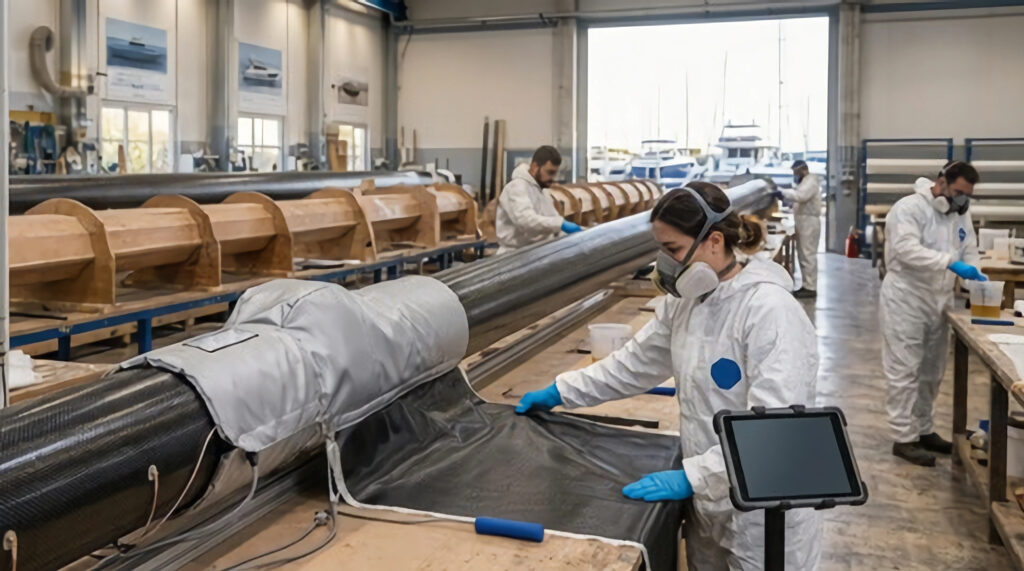
The production of trees, booms, antennas and nautical components made of composite material may require careful temperature control during specific processing stages.
The length of the products, the unconventional geometries and the characteristics of the materials make it important to design the heating system according to the production process.
HeatOn develops customized industrial heating systems designed to accommodate large components, curved surfaces, and structures with different sections.
Solutions may include independent heating zones, sensors distributed along the structure, and temperature control systems, with the possibility of monitoring and recording the data of the thermal cycle.
Each configuration is designed taking into account the geometry of the component, the material used, the required temperatures, and the operating conditions.
Fields of Application
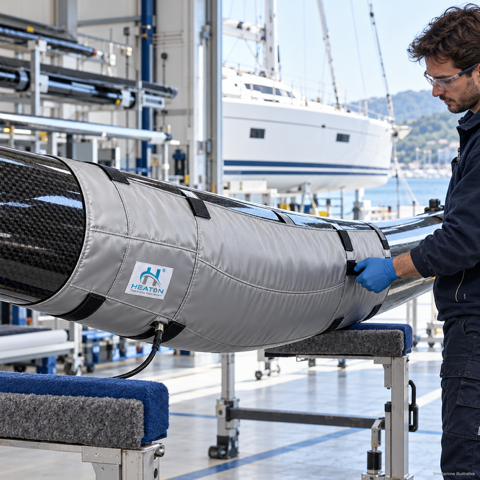
- Marine trees made of carbon fiber: management of heating during the thermal cycles planned for production.
- Boma and longitudinal structures: solutions for components with high length and variable sections.
- Antennas and tubular structures: heating of cylindrical, conical or geometrically complex surfaces.
- Composite marine componentsSupport for polymerization and post-curing processes, when required by the material.
- Molds and production equipment: heating systems that can be integrated into equipment, depending on the constructional characteristics.
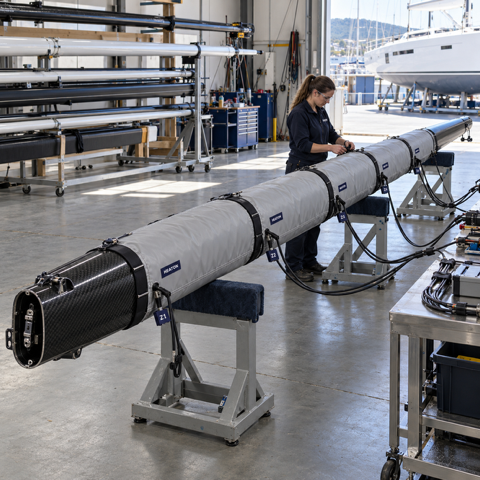
Heating of long workpieces
Trees, booms and antennas can reach considerable lengths, making the distribution of heat throughout the component complex.
A heating system designed exclusively to meet the required temperature may not take into account the different thermal losses, section variations, and characteristics of the structure.
HeatOn develops solutions tailored to the length and geometry of the component, evaluating the distribution of heating elements, the required power, and the placement of sensors.
The design can include multiple heating zones, so as to manage the different thermal requirements of the various parts of the structure.
The operational advantage: distributing the heating along large-sized structures, with a configuration designed to achieve the thermal conditions required by the process.
Multizona heating
A marine tree or structural component can have sections with different thicknesses, masses and geometric characteristics.
These variations can lead to different thermal behavior during heating, making it useful to divide the system into multiple controllable zones.
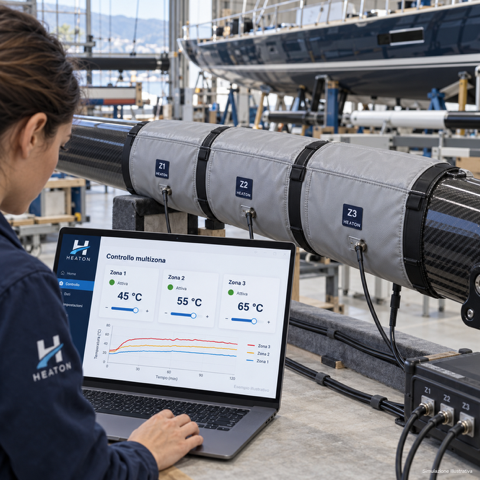
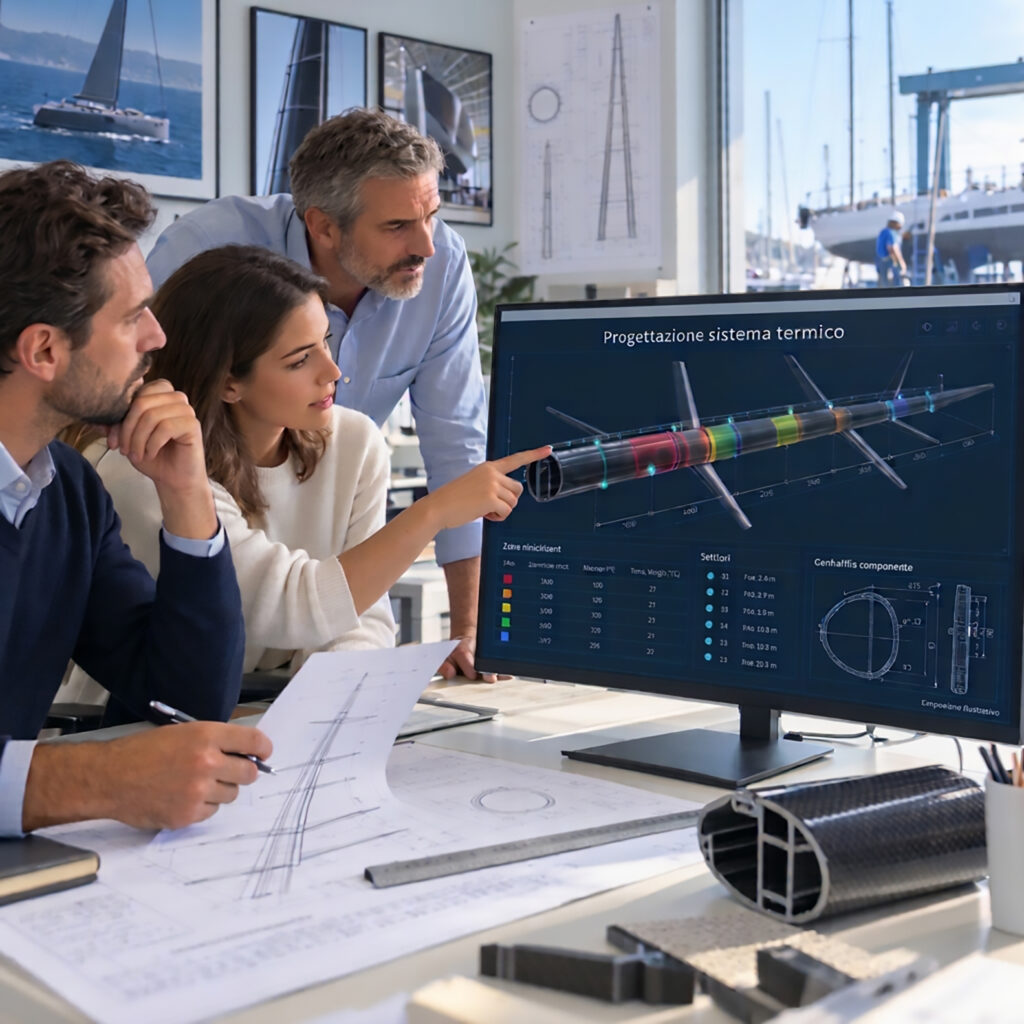
HeatOn can design multi-zone configurations with independent heating elements and dedicated sensors to regulate the thermal input in the different areas of the component.
Depending on the process, the zones can be controlled via a control unit, defining temperatures and control modes consistent with the planned cycle.
The division into zones also allows for assessing any temperature differences between the different parts of the artifact.
The operational advantage: managing heating in a differentiated way, without necessarily applying the same power to the entire structure.
Polymerization and post-curing
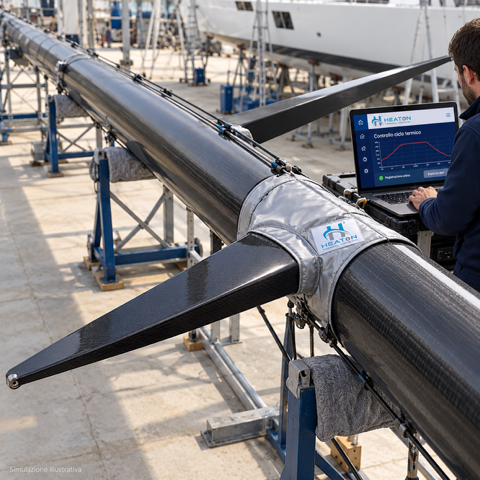
During the production of components made of carbon fiber and other composite materials, the final characteristics of the product also depend on the conditions for the polymerization of the resin matrix.
Depending on the system used, the process may require a heating phase, the maintenance of a certain temperature, and a subsequent controlled cooling.
HeatOn develops heating systems sized according to the thermal cycle required, taking into account the component mass, geometry, dissipation, and technical specifications of the resin manufacturer.
When required by the process, the configuration can also support post-curing cycles, with the thermal parameters being adjusted in the different stages.
The operational advantage: applying heating according to a defined cycle, instead of relying solely on the temperature of the production environment.
Curved surfaces and unconventional geometries
Not all nautical components have regular surfaces or constant sections.
Pruned trees, masts, antennas, tubular structures and components with special curvatures may require solutions that follow the geometry of the artifact.
HeatOn designs flexible and customized heating systems, considering the shape of the surface, the dimensions, the application methods, and the conditions of use.
The configuration can include shaped heating elements, independent zones, and mounting systems compatible with the characteristics of the component.
Particular attention is paid to thermal contact, heat distribution and the positioning of the sensors.
The operational advantage: having a system designed around the real geometry of the product, reducing the need to adapt the production process to standard solutions.
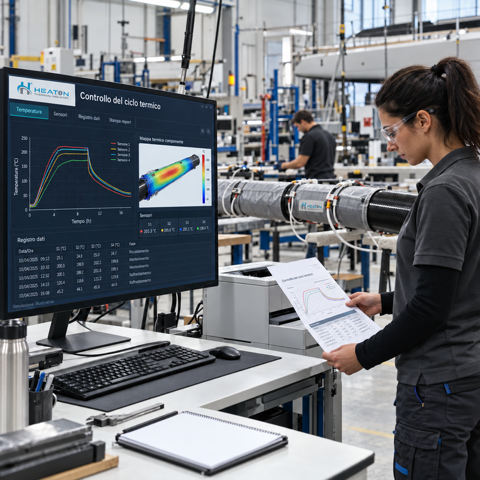
Control and recording of the thermal cycle
During the production of structural components made of composite material, achieving a certain temperature may not be sufficient.
It may be necessary to check how the temperature evolves over time and whether the different areas of the product comply with the conditions stipulated by the process.
HeatOn can develop systems with multi-channel controllers and sensors distributed along the component to monitor and regulate the heating in the different areas.
Depending on the configuration, it is possible to program the thermal cycle, monitor the parameters, and record the data.
The collected information can be used to analyze temperature trends, document the process, and support quality control activities.
The possible use of the data for certified documentation is evaluated based on the requirements of the process and the characteristics of the measurement system.
The operational advantage: knowing and documenting the course of the thermal cycle, with information useful for the repeatability of the processes and the traceability of production.
Customized system design
Each production process has different characteristics. Component length, material, geometry, temperatures, and processing times are factors that influence the choice of heating system.
For this reason, HeatOn starts from the analysis of the actual application, consulting with the manufacturer to understand the needs of the process.
The design considers the heat distribution, the required power, the number of heating zones, the positioning of the sensors, and the control methods.
The goal is to identify a configuration compatible with the production cycle and with the operating conditions of the plant.
The operational advantage: developing a thermal solution based on the needs of the manufacturer, with the support of a technical partner during the system design phase.
💬 Does your production process require controlled heating?
A preliminary technical comparison allows to assess the characteristics of the product, the required temperatures and the possible heating configurations.
QUESTIONS AND ANSWERS FAQ
A: To heat carbon fiber marine components, it is possible to use flexible heating systems designed according to the length, geometry, and characteristics of the product. The system must ensure a heat distribution consistent with the planned production cycle, avoiding excessive thermal differences between the different areas. HEATON develops customized solutions with heating elements, sensors, and control units sized for the specific application.
A: In large-scale structures, the distribution of heat can be complex due to length, thermal dispersion, and section variations. HEATON designs systems with heating elements distributed along the component and, when necessary, divided into multiple independent zones. The sizing takes into account the geometry, the required power, and the placement of sensors to manage the thermal conditions throughout the structure.
A: Yes. HEATON can create multi-zone systems that allow for the independent management of different sections of the product. This solution is particularly useful when the tree has sections with different thicknesses, diameters, or masses, which may require different thermal inputs. Each zone can be equipped with dedicated sensors and managed through an electronic control unit, depending on the needs of the production cycle.
A: Trees, antennas and domes often have non-uniform geometries, with varying diameters, curved surfaces and special sections. HEATON develops flexible and configurable heating elements designed to adapt to the shape of the component. The design takes into account thermal contact, the distribution of heating elements and the methods of attachment, avoiding the need to adapt the product to standard heating systems.
A: Polymerization is the process by which the resin passes from the initial state to the solid state, developing the characteristics provided by the formulation. Post-curing is instead a subsequent thermal treatment, provided for some resin systems, which allows to complete or improve certain material characteristics. HEATON develops heating systems capable of handling the thermal cycles required by both processes, respecting temperatures and times indicated by the resin manufacturer.
A: There is no universal temperature for all carbon fiber components. The parameters depend primarily on the type of resin used, the formulation of the system, and the characteristics of the product. Some processes involve polymerization at room temperature, while others require heating cycles or post-curing at specific temperatures. HEATON sizes the system based on the technical specifications of the material manufacturer and the requirements of the production process.
A: Yes. HEATON can integrate multi-channel controllers and temperature sensors distributed along the component. This configuration allows monitoring of thermal conditions at different points of the product, identifying any differences between the various zones. Depending on the project, the sensors can be associated with independent heating zones, allowing for more precise process control.
A: Yes. HEATON systems can integrate programmable controllers and data acquisition systems to manage and document the different stages of the thermal cycle. It is possible to monitor the temperature trend over time, record the values detected by the various sensors, and store the data related to the processing. These features are particularly interesting for manufacturers who want to improve the repeatability of processes and have useful information for quality control and production traceability.
A: Yes. Depending on the structural characteristics of the mold and the production process, HEATON can develop heating systems that can be integrated into the equipment. The design takes into account materials, geometries, operating temperatures, installation methods, and the need for thermal control. This solution allows for heating to be evaluated directly in the equipment used for component production, rather than relying solely on externally applied systems.
A: The choice depends on the length and geometry of the product, the composite material used, and the thermal cycle required. It is also important to consider section variations, thermal dissipation, the number of zones to be monitored, and the need to record process data. HEATON starts with an analysis of the application to develop a customized solution, defining heating elements, power, sensors, and the control system.
⚙️ Our products for boating
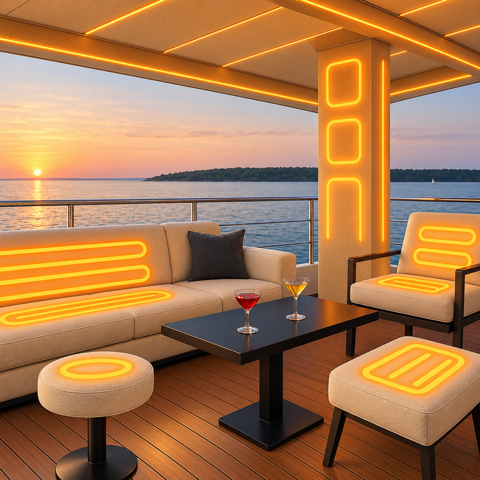
Solutions may include independent heating zones, sensors distributed along the structure, and temperature control systems, with the possibility of monitoring and recording the data of the thermal cycle.
Each configuration is designed taking into account the geometry of the component, the material used, the required temperatures, and the operating conditions.